How Much Weight Can You Lose on Semaglutide? What Georgetown TX Patients Can Expect
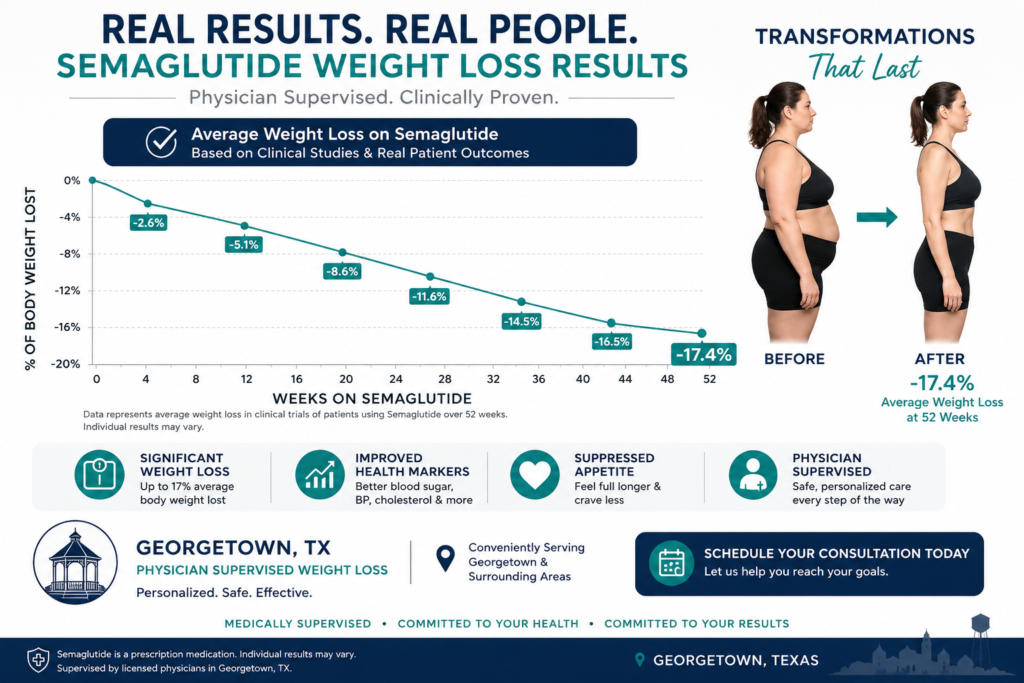
How much weight can you lose on semaglutide? In clinical trials, adults using semaglutide for weight management lost an average of about 15 percent of their body weight over roughly 68 weeks, far more than diet and exercise alone typically deliver. For someone starting at 220 pounds, that works out to around 33 pounds. Results vary from person to person, and your dose, your consistency, and your daily habits all shape the outcome. If you are researching semaglutide in Georgetown TX and want a realistic picture before you pick up the phone, this guide covers the numbers, the timeline, and what actually moves the needle.
How Much Weight Can You Lose on Semaglutide? The Real Numbers
The most cited research on this question is the STEP 1 trial, where participants on the higher weight-management dose of semaglutide lost close to 15 percent of their starting body weight over about 68 weeks, compared to roughly 2 to 3 percent for those on a placebo. That is a meaningful gap.
Put in real terms, a 200-pound person losing 15 percent drops about 30 pounds. A 250-pound person can expect closer to 37 pounds. Some people lose considerably more, and about a third of trial participants lost 20 percent or more. Others lose less. These are averages, not guarantees, which is exactly why a physician tailors the plan to your body rather than promising a fixed number.

What Affects How Much Weight You Lose
Two people on the same medication can end up with very different results. The biggest factors are:
- Reaching the full dose. Semaglutide is titrated up slowly over a few months to reduce side effects. People who reach and stay on the therapeutic dose tend to see the strongest results.
- Consistency. Weekly dosing without long gaps matters. Missed weeks blunt progress.
- Diet quality. The medication reduces appetite, but what you eat still counts. Prioritizing protein and whole foods protects muscle and improves results.
- Physical activity. Even light strength training helps you lose fat instead of muscle and supports long-term maintenance.
- Starting weight. People with a higher starting weight often lose more total pounds, even at the same percentage.
- Time on treatment. Weight loss builds gradually and tends to peak around the one-year mark.
How Long Does It Take to See Results
Most patients notice reduced appetite within the first 2 to 4 weeks, often before the scale moves much. Meaningful weight loss usually begins around weeks 8 to 12, once the dose has been stepped up. From there, loss continues steadily and generally peaks near 60 to 68 weeks, then levels off as your body reaches a new set point. Patience helps. This is a gradual metabolic change, not a crash diet.
Who Is a Good Candidate for Semaglutide
Semaglutide for weight loss is generally appropriate for adults with a BMI of 30 or higher, or a BMI of 27 or higher who also have a weight-related condition such as type 2 diabetes, high blood pressure, or high cholesterol. It is not right for everyone. People with a personal or family history of medullary thyroid cancer, or a condition called MEN2, and those who are pregnant should not use it. A physician evaluation confirms whether it is a safe fit for your health history, which is why treatment always starts with a consultation.
Keeping the Weight Off
An honest point worth knowing before you start: semaglutide works while you take it. Research shows that many people regain a significant portion of the weight within a year of stopping, because the underlying appetite and metabolic signals return. This is not a failure of willpower, it is biology. The patients who keep the weight off treat the medication as one part of a longer plan that includes sustainable eating habits, activity, and ongoing physician guidance on how and when to adjust or taper the dose.
Starting a Semaglutide Program in Georgetown TX
If you have tried dieting without lasting results, medical weight loss changes the equation by addressing the biological reasons weight is hard to lose. Our semaglutide program in Georgetown TX is physician supervised from your first visit through ongoing monitoring, and no referral is required. The best way to get a realistic answer for your body is a quick conversation. Call our weight loss clinic Georgetown TX at (512) 881-7650 or book a free consultation to see whether you qualify.
Frequently Asked Questions
How much weight can you lose on semaglutide in a month? Early in treatment, some patients lose roughly 1 to 2 percent of their body weight per month, which is often 3 to 6 pounds. Results build over time, and the first few weeks are usually about appetite reduction rather than large drops on the scale.
Is semaglutide the same as Ozempic and Wegovy? Yes, semaglutide is the active ingredient in both. Ozempic is FDA approved to treat type 2 diabetes, and Wegovy is approved specifically for chronic weight management. A physician determines which option and dose fit your situation.
Will I gain the weight back after stopping semaglutide? Many people regain a portion of the weight after stopping, because the medication’s appetite effects end when treatment does. A maintenance plan with lasting habits and physician guidance helps protect your results long term.
Do you need a prescription for semaglutide in Georgetown TX? Yes. Semaglutide is a prescription medication that requires a physician evaluation before use. No referral is needed to book a consultation with our Georgetown TX weight loss clinic.
How much does semaglutide cost? Cost depends on your treatment plan and whether your insurance covers it. Call (512) 881-7650 to verify your benefits and get a clear price before you begin.
Medical Disclaimer
The information on this page is for general informational purposes only and does not constitute medical advice, diagnosis, or treatment. Weight loss results vary by individual, and no specific result is guaranteed. Semaglutide and other GLP-1 medications are prescription drugs that require a physician evaluation before use, and they are not appropriate for everyone. Common side effects may include nausea, vomiting, diarrhea, and constipation. Rare but serious risks may include pancreatitis and gallbladder problems. Always consult a licensed healthcare provider before starting any treatment. Learn more at the FDA’s official website.